
IPTV for Champions League Football 2026: A Tester Q&A
August 21, 2026 · 7 min read
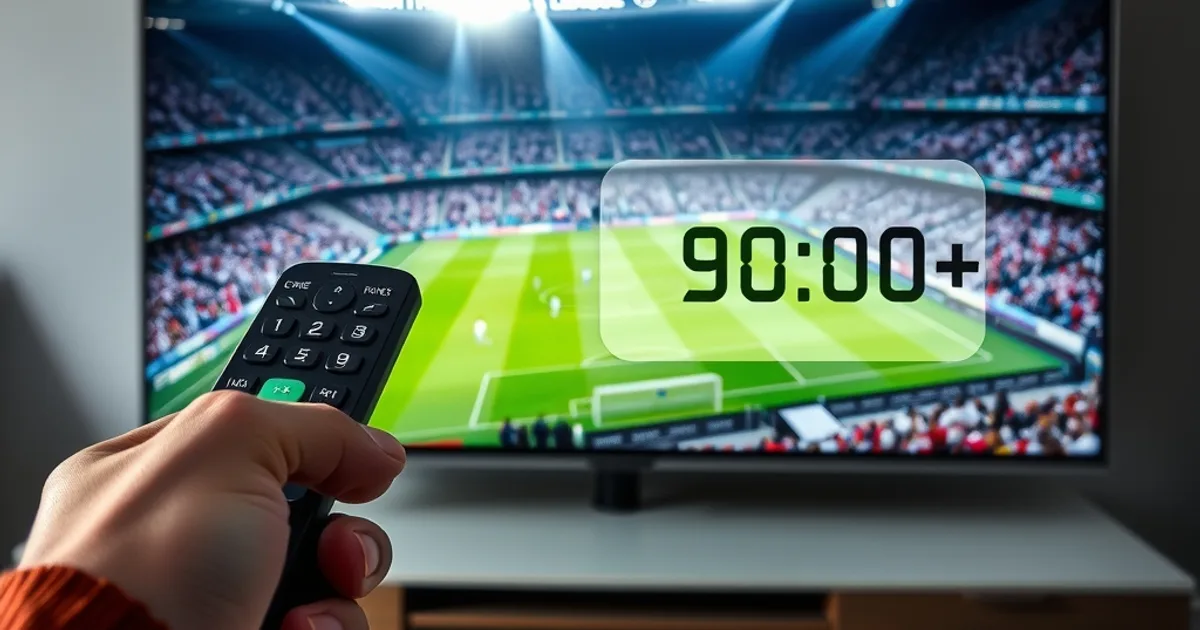
IPTV for Champions League football lives or dies in one moment: whether the picture is still sharp when a match is deep into stoppage time and every other household on the block is streaming the same kick. To find a straight answer, we sat down with the tester who ran three IPTV services back to back through real European and international fixtures — Marinios IPTV, Diablo IPTV and Kemo IPTV — and asked what actually happened. No script, just the conversation.
What follows is that Q&A, lightly trimmed for length. If you only came for the numbers: on real 2026 pricing, Marinios IPTV for Champions League football turned out to be both the steadiest stream on the night and the cheapest of the three on every plan except one. Here is how that conclusion was reached.
Q: What exactly did you test, and why these three services?
A: All three came up repeatedly whenever people asked which IPTV for Champions League football actually holds up, so the test had to include them. Each service got a genuine high-stakes fixture, watched live, at peak viewing hours, not a quiet weekday afternoon match with nobody else on the network. Marinios ran during a Champions League night. Diablo got a Premier League derby immediately followed by a UEFA match, back to back, no break between them. Kemo drew a World Cup qualifier, the kind of fixture where a missed clearance changes a tournament.
The scoring was simple and the same for all three: did the stream buffer at any point during the match, how sharp was the picture once the game got fast, and how deep is the channel line-up behind the headline sports package. Price got weighed separately, against each provider's real, current plan pricing rather than whatever number is floating around in older marketing.
Want to check Marinios IPTV before the next Champions League fixture?
Q: How did Marinios IPTV perform during the Champions League match itself?
A: Genuinely the strongest result of the three. Zero buffering across the full match, including the stretch right around a peak-hour spike when the picture on a shakier service would typically start to soften first. The image stayed sharp the whole way through — no visible drop in sharpness during fast breaks or crowded penalty-box replays, which is usually where a weaker stream shows its weak point first.
Channel depth held up too: the sports package covers the names you actually want for European football — major international sports channels are all in the line-up on every plan, no separate "sports tier" to unlock. Marinios leans on its Anti-Freeze™ 9.8 technology and high-performance servers for that stability, and on pricing it is hard to argue with: $29 for 3 months, $35 for 6 months, $63 for 12 months and $99 for 24 months, flat USD, same channel access on every tier.
Q: Where does Diablo IPTV fit into the picture?
A: Solid, and it earned that back-to-back test on purpose — a Premier League derby followed immediately by a UEFA match, no recovery window in between. Both streamed cleanly, no drop-outs, no visible loss of sharpness switching from one match straight into the next. That is not a small result; a lot of services show their weak point exactly when asked to hold a second consecutive high-demand fixture right after the first one ends.
The one gap worth flagging: Diablo's line-up leans European and international rather than carrying a dedicated US sports channel tier, so it is a better fit if your football diet is Premier League and Champions League specifically. On price, Diablo currently runs $29 for 3 months, $37 for 6 months, $65 for 12 months and $95 for 24 months — a touch above Marinios on the shorter plans, but it does undercut Marinios by $4 on the 24-month tier, the one length where it comes out cheapest of the three.
Q: And Kemo IPTV — what stood out during the World Cup qualifier?
A: Stability under real pressure. A World Cup qualifier is exactly the kind of match where a stream getting caught out matters most, and Kemo held a stable connection with excellent picture quality the whole way through — no stoppage-time surprises. Kemo's headline number is channel breadth: north of 30,000 channels, which is a genuinely large line-up if breadth across sports, entertainment and international channels matters more to your household than any single package.
Pricing currently sits at $29 for 3 months, $36 for 6 months, $69 for 12 months and $99 for 24 months. That puts Kemo's 12-month plan $6 above Marinios and $4 above Diablo — worth it if the sheer channel count is the deciding factor, less so if football specifically is the only thing you are optimizing for.
Q: So which one actually wins for football fans specifically?
A: On stream quality, Marinios, clearly — zero buffering through a genuine Champions League night is the single best result of the three, and the sports package (featuring major international sports channels) is built for exactly this use case. What surprised even the tester was that Marinios also wins on price almost across the board once you check real current numbers rather than older marketing copy: $29 vs $29 vs $29 on the 3-month plan (a dead heat), then Marinios pulls ahead at 6 months ($35 vs Diablo's $37 vs Kemo's $36) and again at 12 months ($63 vs Diablo's $65 vs Kemo's $69).
The one plan where it does not win outright is the 24-month tier, where Diablo's $95 edges out Marinios' $99 by $4. So the honest verdict for IPTV for Champions League football in 2026: if you are committing for a full two years and price is the only variable, Diablo is marginally cheaper. On every other plan length, and on the actual matchday performance that prompted this whole test, Marinios came out on top.
Compare all four Marinios IPTV plans and see why it topped the test.
Q: Any tips for keeping the stream steady during a big match?
A: A few habits matter more than people expect. Ethernet beats Wi-Fi whenever it is an option, especially on a device sitting far from the router. Restarting the streaming app an hour or so before kickoff clears its memory and tends to prevent the slow buffer creep that sometimes shows up late in a match rather than early. And a built-in VPN — which Marinios includes on every plan rather than as a separate app to install — adds a layer of connection privacy without anyone having to remember to switch it on before the whistle.
Beyond that, the boring advice still wins: check that your connection can actually sustain the stream's bitrate before kickoff, not during it. A provider with strong server-side technology like Anti-Freeze™ 9.8 covers its side of the equation; your own Wi-Fi congestion at 8 PM on a Tuesday is the other half, and no IPTV service can fix that part for you.
Frequently asked questions
Which IPTV service is best for Champions League football in 2026?
In this test, Marinios IPTV held up best: zero buffering through a full Champions League match, a sharp picture throughout, and a sports package that includes major international sports channels on every plan.
Is Marinios IPTV cheaper than Diablo IPTV and Kemo IPTV?
Yes, on most plans. Marinios matches both at $29 for 3 months, then comes in cheapest at 6 months ($35) and 12 months ($63). Diablo edges ahead only on the 24-month plan ($95 vs Marinios' $99).
What should I check before choosing an IPTV service for a big match?
Look for a real stability track record under peak-hour load (not just a features list), a channel package that actually covers the leagues you watch, and technology like a built-in VPN or anti-freeze protection that is included by default rather than left for you to bolt on.
Read next: the pricing page or the FAQ.