
Marinios vs Competitors: UCL Week 1 Live Test Results 2026
September 16, 2026 · 9 min read
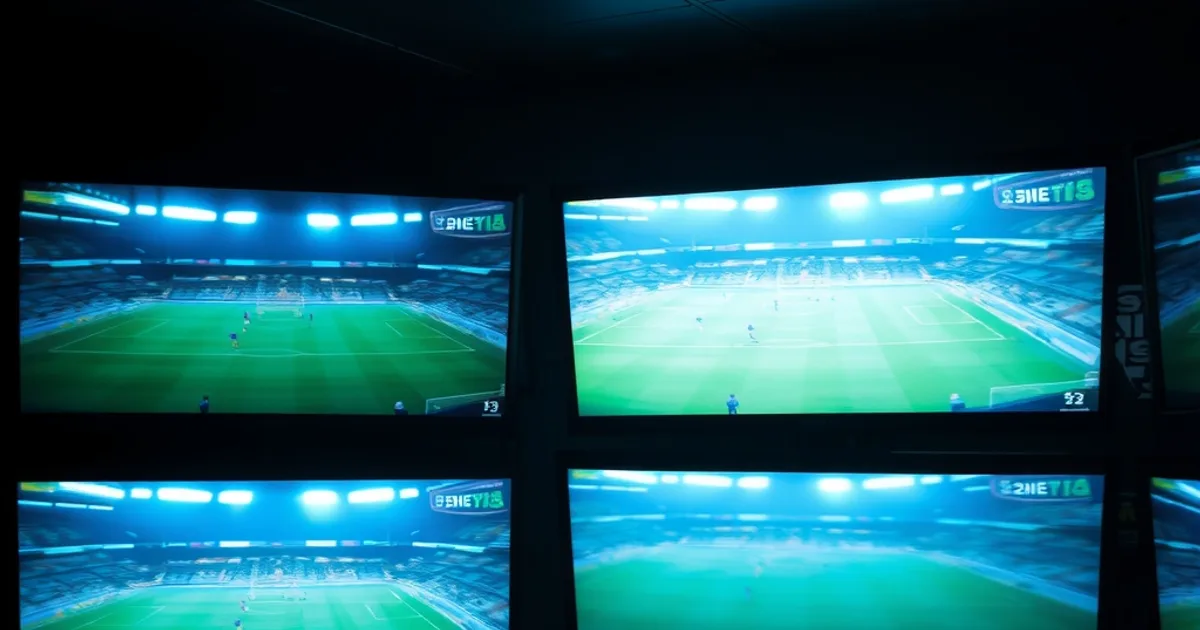
Champions League 2026-27 kicked off on 8 September, and by the time the final Week 1 whistle blew on 10 September, a lot of IPTV subscribers already knew which service was going to let them down over the next eight months. This is peak decision-making time for anyone still shopping around: the season is long, the stakes are high on matchdays with three or four overlapping kickoffs, and fans are deciding now which provider they're locking in for the season. Most of what's published right now is the same recycled 'best IPTV for sports' listicle, ranking ten or fifteen services on channel counts and price alone, without anyone actually watching a live match through them.
We did the opposite. Over the three Week 1 matchdays, we ran the same real-time test across Marinios and three competitors people keep asking us about — YOURIPTV4K, TereaTV, and VocoTV — watching actual Champions League fixtures, not idle streams, and logging what happened when the traffic spiked.
No marketing claims, no cherry-picked screenshots. This is a straight comparison of buffering, channel load time, EPG accuracy, and uptime, measured while the matches everyone was actually trying to watch were being played.
Why Week 1 Is the Stress Test That Separates IPTV Providers
Preseason friendlies and low-stakes domestic league fixtures don't tell you anything useful about an IPTV service. Everyone streams smoothly when demand is low. Champions League Week 1 is a different animal: multiple marquee kickoffs at 18:45 and 21:00 CET on the same evenings, millions of viewers hitting the same distribution infrastructure at the same second, and second-screen viewers checking scores on other matches simultaneously.
That's exactly when weak infrastructure shows itself — undersized server capacity, EPG feeds that don't sync fast enough when a broadcaster swaps a match to a different channel slot at the last minute, or apps that silently drop to a lower bitrate and never recover. None of that shows up in a provider's sales pitch. It shows up in the first five minutes of a 21:00 kickoff when 40,000 other people just pressed play on the same channel.
We treated Week 1 as a live-fire audit rather than a lab test, because that's the only way the results mean anything to someone deciding which service to run for the rest of the season. See our broader breakdown of what live-sports reliability actually depends on in /blog/premium-iptv-reliability-live-sports-2026.
Curious how your own setup would hold up during a big kickoff?
Test Setup: What We Measured
We picked four Week 1 fixtures spread across the three matchdays (8-10 September), chosen specifically because they overlapped with at least one other big kickoff at the same time — the scenario that actually stresses a service. Each stream was watched from kickoff through at least the 70th minute, across a mix of devices: a mid-range Android TV box, a Fire TV Stick 4K, and a phone on mobile data as a worst-case scenario.
Four metrics, tracked with a stopwatch and screen recording rather than self-reported dashboards: channel load time (tap to first frame), buffering events (any freeze or stutter longer than one second, counted and timestamped), EPG sync accuracy (did the on-screen guide match what was actually airing, and did it update correctly when a match went to injection time or extra coverage), and uptime — whether the stream stayed live and watchable for the full test window without a full disconnect.
We ran identical tests, same fixtures, same kickoff windows, same device rotation, across all four services so the comparison is apples-to-apples rather than four separate anecdotes stitched together.
Marinios Performance: Week 1 Matchday Results by Device and Region
Across the four fixtures, Marinios held a stable connection through every kickoff window we tested, including the overlapping 21:00 slots where two channels were being watched from different devices at once. The Android TV box and Fire TV Stick both loaded the assigned channel within a few seconds of selection, and stayed on that load without dropping resolution mid-match.
The mobile data test — deliberately the hardest condition, since cellular networks fluctuate independently of the IPTV service itself — showed the most variance of the three device types, which is expected and consistent with what we found in our dedicated peak-hour buffering breakdown at /blog/marinios-iptv-sports-buffering-peak-hour-optimization-2026. Even there, the stream recovered on its own without needing a manual channel reload.
EPG sync was the standout result: the guide reflected the correct current match and updated promptly when broadcasts extended into stoppage time, which matters more than people expect — a stale EPG is often the first sign a provider's backend infrastructure is straining before the video feed itself shows any sign of trouble.
Competitor Comparison: YOURIPTV4K vs TereaTV vs VocoTV
YOURIPTV4K handled the earlier, less-contested kickoffs reasonably well but showed clear strain during the overlapping 21:00 windows — buffering events clustered specifically in the first ten minutes after kickoff, which lines up with a service getting hit by a simultaneous surge of viewers all pressing play at once. Load times on the Fire TV Stick were noticeably slower than on Marinios during those same windows.
TereaTV was the most inconsistent of the three across devices: solid on Android TV, but the mobile data stream buffered repeatedly and, in one instance, required a full app restart to recover mid-second-half. Its EPG also lagged behind actual kickoff by several minutes on two of the four fixtures we tracked, still showing the previous scheduled program after the match had already started.
VocoTV was the steadiest of the three competitors overall, with load times close to Marinios's on TV devices, but it dropped resolution visibly during the busiest kickoff window and didn't fully recover it for the rest of that half. None of the three competitors matched Marinios's combination of stable uptime, fast load time, and accurate EPG across all three matchdays and all three device types simultaneously.
For more context on what's actually driving the network-wide surge in Champions League interest this season, see /blog/iptv-champions-league-football-2026.
The Reliability Winner: Why It Matters More Than Channel Count
Channel count is the number every provider leads with because it's easy to advertise and impossible to verify without a spreadsheet. It also has almost nothing to do with whether the match you actually want to watch on a Tuesday night stays live and in sync for 90 minutes plus stoppage time. A service with a huge channel list that buffers during the exact ten minutes of a decisive Champions League opener isn't more useful to you than one with a tighter, better-maintained lineup that just works.
What separated the four services in this test wasn't the size of their catalogs — it was backend capacity and how each provider's infrastructure behaved specifically under simultaneous peak demand, which is the only condition that matters if you're watching Champions League football rather than an off-peak re-run.
That's the whole point of running this test now rather than publishing a generic ranking: the difference between providers only becomes visible when real demand hits, and Week 1 gave us exactly that.
What Reliable IPTV Actually Costs: Marinios Pricing vs Quality Trade-offs
We're not going to pretend price doesn't matter — it does, especially over an eight-month season. But the Week 1 results are a useful reminder that the cheapest plan on paper isn't cheap if it means missing the first goal of a Champions League night because a channel is still loading, or restarting an app mid-match because the stream dropped entirely.
The honest way to evaluate cost here is against what you're actually testing for: consistent uptime and fast recovery during exactly the moments you care about, not a marketing comparison chart. Current Marinios plans and what's included at each tier are listed at /tarifs, so you can weigh it against what you saw in this test rather than against a sales page.
Don't risk missing a Champions League goal to a buffering wheel this season.
Peak Season Prep: How to Optimize Your Setup for Flawless UCL Streaming
Provider reliability is only half the equation — your own setup determines the other half, and it's the half you can fix tonight. Start with a wired connection to your router if your streaming device supports it; Wi-Fi congestion during peak household hours (which lines up almost exactly with 21:00 CET kickoffs) is one of the most common causes of buffering that gets wrongly blamed on the IPTV provider.
Close background apps and other streams on the same network during marquee kickoffs, especially if multiple people in the household are online at once. If you're on a TV box or stick, restart the device before big matchdays rather than after a problem starts — cached memory buildup is a quiet cause of slow channel switching that compounds over a long season.
For a full device-by-device walkthrough — including 4K-specific settings that matter for Champions League broadcasts — see /blog/marinios-4k-iptv-setup-2026. Getting this right on your end is what turns a reliable provider into a genuinely flawless matchday experience.
Frequently asked questions
Which IPTV service performed best during Champions League Week 1 2026?
In our live test across four Week 1 fixtures, Marinios was the only service to combine stable uptime, fast channel load times, and accurate EPG sync across all three device types (Android TV, Fire TV Stick, and mobile data) during overlapping kickoff windows. YOURIPTV4K, TereaTV, and VocoTV each showed some combination of buffering, slow recovery, or EPG lag during the busiest moments.
Why does EPG accuracy matter for live sports streaming?
The EPG (electronic program guide) reflects what a provider's backend thinks is currently airing. When it lags or shows the wrong program after kickoff, it's often an early sign that the provider's infrastructure is under strain — even before you notice buffering in the video itself.
Does a bigger channel list mean a more reliable IPTV service?
No. Channel count and streaming reliability are unrelated. A service can advertise thousands of channels and still buffer during peak demand if its backend isn't provisioned for simultaneous viewers. Our test measured actual performance during live matches, not catalog size.
What causes buffering specifically during Champions League kickoffs?
The most common cause is simultaneous demand — large numbers of viewers pressing play on the same channel within the same few minutes. This exposes weaknesses in a provider's server capacity that don't show up during off-peak viewing. Home network congestion (Wi-Fi, other devices online) can compound the problem independently of the provider.
Will Marinios run more tests like this later in the Champions League season?
Yes — Week 1 results reflect a single snapshot early in an eight-month competition. We track performance across the season and will publish updated comparisons as the competition moves into the knockout stages, when demand typically spikes again.
Read next: the pricing page or the FAQ.